Home » Review of Sitecore: Powerful CMS The Biggest Brands Use
Review of Sitecore: Powerful CMS The Biggest Brands Use
Procter and Gamble’s online ecosystem was too complex to succeed. It consisted of 10 different content management systems and used a variety of technologies that didn’t always play nicely together.
As a result, the company’s digital marketing pros couldn’t launch online brand promos in less than four months. That’s an unacceptable benchmark for an industry that needs to respond quickly to consumer trends.
But P&G needed more than a platform that would streamline the rollout of new marketing campaigns. The company also required multilingual support in a global economy.
So Procter and Gamble turned to the Sitecore Experience Platform, a content management system (CMS) that also uses marketing automation to nurture customers through the sales cycle.
As a result, the company consolidated 10 CMS’s into one, launched about one digital property per day (375 in total), and delivered a stronger, more consistent online presence.
And that’s what Sitecore can do for your business as well.
Sitecore CMS Review
So what is Sitecore? It’s a content management system (CMS).
But what is a CMS? An online platform that strategists use to create, edit, format, and deploy content online.
The most popular CMS on the market by far is WordPress. If you own a website, then you probably use WordPress to produce content.
If you’re into content marketing, then it’s likely you use WordPress a lot.
WordPress enjoys one noticeable advantage over Sitecore, though. It’s free.
So why would you pay money for Sitecore when you can get a CMS like WordPress for free? Because Sitecore is so much more than just a CMS.
Sitecore is More Than a CMS
Although the short answer to “What is Sitecore?” is “It’s a CMS,” that’s not the complete answer.
Sitecore is so much more than a CMS.
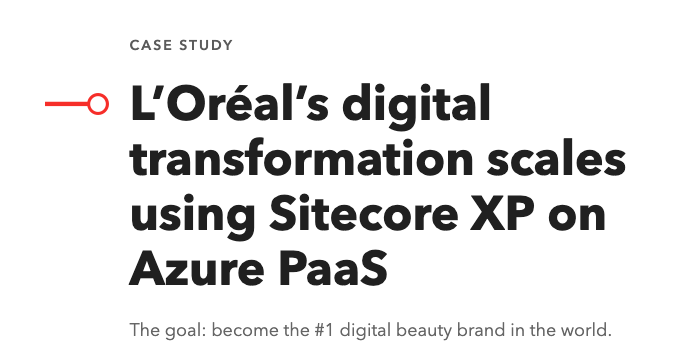
In this article, I’ll explain the “big picture” about Sitecore so you can get a complete understanding of the platform and its capabilities. Then, you’ll understand why companies like L’Oreal, Chick-Fil-A, and P&G pay money for it.
The Sitecore Experience Platform
The Sitecore Experience Platform brochure promises to give digital marketers “everything they need.”
That’s probably a bit far-fetched. But the platform does include a number of goodies. Among them:
A suite of digital marketing tools
A complete view of customer data
Insights generated via machine learning
The whole point of Sitecore XP is to move beyond the traditional CMS model. It also offers a rich toolset that enhances user experience.
Here are the benefits you’ll appreciate:
A single platform that manages personalized content delivery across multiple sites and in multiple languages
A single source of truth for all customer data
The ability to create content once and display it anywhere
Native analytics
Testing capabilities
Machine-learning for enhanced insights
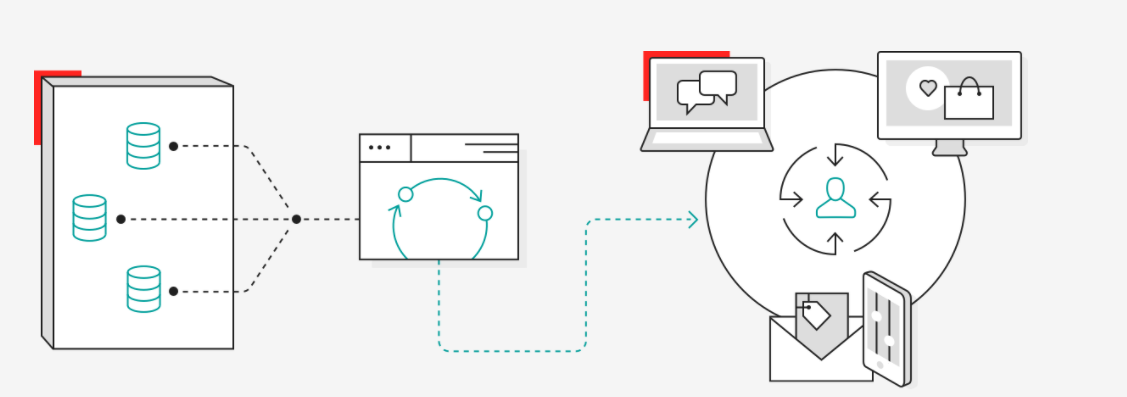
Another key benefit you’ll get from the Sitecore Experience Platform: it’s a headless architecture.
Okay, what does that mean? It means you don’t store all the elements of your content as a single entity. Instead, you store them as parts and let your websites and apps decide how they want to display the parts.
Let’s say you’re rolling out a new T-shirt that you want to market to your customers. You’ll do that via a web page and also promote it on an app that your customers can download.
If you create a single web page to promote the shirt, it might display just fine on a website. But will it work for the app? Not unless the app is using HTML to serve pages.
And even then, it might not look as nice on a mobile screen as it does on a desktop or laptop screen.
With a headless solution, you could store different elements of the promo about the shirt: the headline, the subheading, the image, the full text of the copy, and more. Then, let both your website and your app decide how to “assemble” all those parts to make an attractive presentation.
That’s what Sitecore XP does. It gives you the flexibility to promote brand consistency and positive user experience across multiple channels with headless content creation.
Further, the platform uses AI to generate a personalized experience. The Sitecore AI identifies visitor trends, creates market segments, and even updates content to produce an online presence that’s tailor-fit to each user.
Sitecore XP also includes a database that aggregates visitor data from all channels. Use it to measure the value of visits and how people are traversing through your content.
Further, the platform also brings marketing automation to the table. Use it to streamline customer interactions and nurture prospects through the sales cycle.
Finally, Sitecore XP offers three deployment options so you can rapidly bring your content online.
Sitecore Experience Commerce
Are you running an e-commerce website? If so, then you’ll need a CMS that’s designed for promoting your products online.
Enter Site Experience Commerce. It builds on the Sitecore Experience Platform to deliver personalized content for online shoppers.
For starters, you can build commerce pages with the platform’s powerful WYSIWYG (What You See Is What You Get) editor.
Even better: Sitecore XC also empowers you to create multiple storefronts in a variety of languages.
The platform also uses real-time data and historical experiences to create personalized storefronts for each visitor.
Sitecore XC also includes promotion algorithms that maximize user engagement.
Sitecore Content Hub
Sitecore Content Hub is a one-stop-shop for all your content needs.
It includes a 360-degree view of your digital assets, media files, product info, and other content.
The platform also enables you to categorize your assets and search through content. It will even use artificial intelligence to automatically tag content so you can retrieve it quickly.
And yes, Sitecore Content Hub enables you to share your assets with others.
Further, the tool supports digital rights management and security as well.
Sitecore Content Hub also enables you to plan, manage, and optimize your content strategy.
Finally, it streamlines collaboration between team members so they can all stay in sync on content production.
Add-Ons
What I’ve explained so far are the three “core” components of Sitecore. However, there are several add-ons as well:
Email Experience Manager – Handles tasks related to email marketing
Sitecore Mobile Experience – Enables you to develop mobile-friendly apps with an SDK
Sitecore Managed Cloud – Hosts your apps with industry-standard uptime
Additionally, the company offers Sitecore KickStart. Use that program to get your website up and running quickly.
Licensing
How does Sitecore licensing work? It takes multiple factors into account, including:
Visits per month
Installations
Concurrent users
The add-ons you’ve selected
You’ll have to reach out to the sales team for an exact quote on the price. It won’t be cheap, though.
What Customers Are Saying
Current Sitecore customers are speaking their minds online. Here’s what they’re saying.
First, the positive:
Easy-to-follow user interface
Brings together tech and marketing teams for better coordination
The platform4 is extensible and customizable
Includes everything you need to build a customized CMS for enterprise-level web ops
Supports complex languages like Japanese and Mandarin
Now, the negative:
The platform runs a little slow at times
Screen freezes every now and then
API documentation and examples aren’t very complete
Builds take a long time to finish
Wrapping It Up
If you’re looking for a robust, content management solution that lets you reach customers at scale, then you should check out Sitecore.
Unlike many other digital marketing platforms, it doesn’t appear that Sitecore gives you the option to “try before you buy.” However, you can request a demo. Use that opportunity to learn more about the product and get your questions answered.
Then, decide if it’s best for your business.
Leave a Reply
Welcome To John Lincoln Marketing
Welcome to John Lincoln’s personal website. You can learn about John Lincoln’s books, films, book him to speak and contact him. John is directly associated with many of the businesses mentioned on this website and freely discloses this information.
About the Author
John Lincoln is CEO of Ignite Visibility, one of the top digital marketing agencies in the nation. Outside of Ignite Visibility, Lincoln is a frequent speaker and author of the books Advolution, Digital Influencer and The Forecaster Method. Lincoln is consistently named one of the top digital marketers in the industry and was the recipient of the coveted Search Engine Land “Search Marketer of The Year” award. Lincoln has taught digital marketing and Web Analytics at the University of California San Diego since 2010, has been named as one of San Diego’s most admired CEO’s and a top business leader under 40.
Google Search Quality Rater Guidelines Compliance Checklist Google’s Search Quality Rater Guidelines (SQRG) are not a direct ranking algorithm, but they are the playbook human